Quick Answer: Hermes Agent is the strongest open-source self-hosting agent on GitHub right now, with 239,000 stars and a built-in learning loop. The reason people leave it is rarely the agent. It is the harness. If you want the same idea, a self-improving agent with memory and skills, without running your own server, OpenCraft AI (Ocai) is the managed answer. If you want to stay self-hosted, OpenClaw is the closest fork but carries a documented security history. If you want Claude specifically, Anthropic’s Claude Cowork runs on Claude models only. Match the tool to whether you want to host it, manage it, or build it.
You found Hermes Agent on GitHub. 239,000 stars. A README that promises an agent that grows with you, writes its own skills, remembers your projects, and talks to you from Telegram while it works on a $5 VPS.
That promise is real. Hermes Agent delivers most of it.
The problem shows up a few hours later, in the install and the config. This post maps the alternatives honestly, so you can decide before you spend a weekend on a harness.
What Hermes Agent Actually Is, and Why It Is So Popular
Hermes Agent is an open-source agent from Nous Research, MIT licensed. It is not a thin wrapper over a chat API. The README describes a closed learning loop: the agent curates its own memory, creates skills after complex tasks, improves those skills during use, and builds a model of who you are across sessions. It can schedule its own jobs through a cron system, spawn isolated subagents for parallel work, and run on seven terminal backends from your laptop to a Docker host to a serverless sandbox.
That is genuinely ahead of most tools in the category. If you are a developer who wants full control and you are comfortable owning the server, Hermes Agent is a reasonable default.
The honest way to read the popularity is this: people want an agent that learns, and Hermes is the most credible open-source proof that the idea works. The question is whether you want to operate it.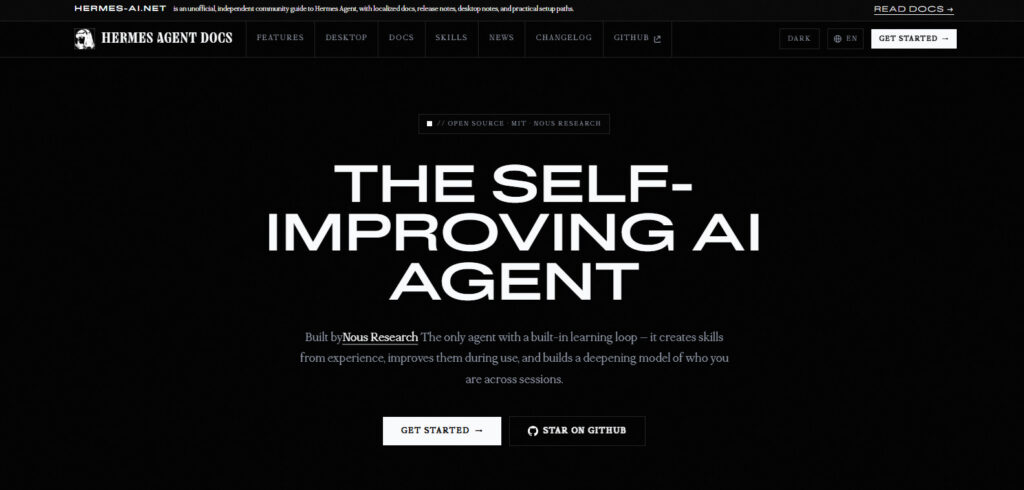
The Harness Problem: Why People Search for Hermes Agent Alternatives
A harness is everything around the model: the install script, the config file, the API keys, the terminal backend, the gateway, the memory files. Hermes Agent gives you all of it and makes you the operator.
Look at what the README itself documents. On Windows, the installer bundles a portable Git Bash and warns that Defender may flag uv.exe as a false positive, with a full PowerShell verification routine to prove the file is authentic. That is a real friction point, documented by the project, not an invented complaint.
Then you pick a terminal backend. Local, Docker, SSH, Singularity, Modal, Daytona, or Vercel Sandbox. Then you either collect five API keys for the model, search, image generation, speech, and browser, or you run hermes setup –portal to log into Nous Portal through OAuth.
None of this is unreasonable for a self-hoster. It is exactly the work a self-hoster signs up for. It is also why a founder or an operator starts Googling alternatives at hour three.
There is a second, quieter cost. Hermes is self-hosted, so your memory lives where your server lives. If that box dies, or the sandbox backend misbehaves, the continuity you bought the tool for is your problem to restore. The agent remembers, but only as reliably as the infrastructure you run it on.
Hermes Agent Alternatives: The Shortlist
OpenCraft AI (Ocai)
What it does: Ocai is a managed agent platform. The product claim is “One prompt, that’s all it takes.” It runs in an isolated sandbox, fails over between open-weight models when one stalls, and keeps memory that compounds across sessions, so the next prompt starts sharper than the last.
Where it wins over Hermes: The learning loop you have to set up and host yourself in Hermes is the default in Ocai. No install script, no terminal backend choice, no API key collection, no server to keep alive. The sandbox is managed by the platform, so the agent can run unattended without taking your laptop or your VPS with it.
Where Hermes still wins: Self-hosting and a free tier. Hermes is open source and runs for the cost of whatever compute you point it at. If owning the stack matters more than saving the setup hours, Hermes keeps that advantage.
What users report: The testimonials on the Ocai site describe the compounding effect: “The tenth brief comes back sharper than the first,” and a founder who says the memory is “actually infinite.” Those are vendor-published testimonials, so read them as directional, not as independent reviews.
Pricing: Pay as you go. Usage-based credits with no subscription, no rate limits, and 100 free credits to start (as of this writing, per the Ocai pricing page). Try OpenCraft AI free.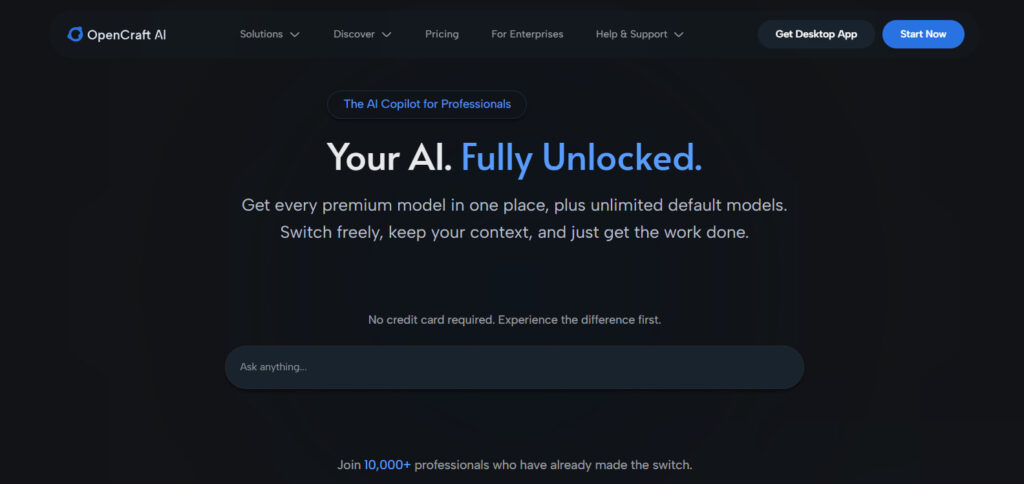
OpenClaw
What it does: OpenClaw is the most-discussed open-source alternative to Hermes, a persistent local agent in the same self-hosted family. Hermes even ships a hermes claw migrate command, which tells you how much overlap the two communities share.
Where it wins: Self-hosting with an active community and a migration path in either direction.
The documented risk: In late January 2026, researchers disclosed CVE-2026-25253, a one-click remote code execution flaw in OpenClaw. Censys counted 21,639 exposed OpenClaw instances as of January 31, 2026, and one advisory put the exposed count above 40,000 (Hunt.io, ProArch). The risk is not the agent’s quality. It is that a self-hosted agent you forget to patch becomes public attack surface.
Pricing: Open source and free to run on your own hardware. No SaaS price exists.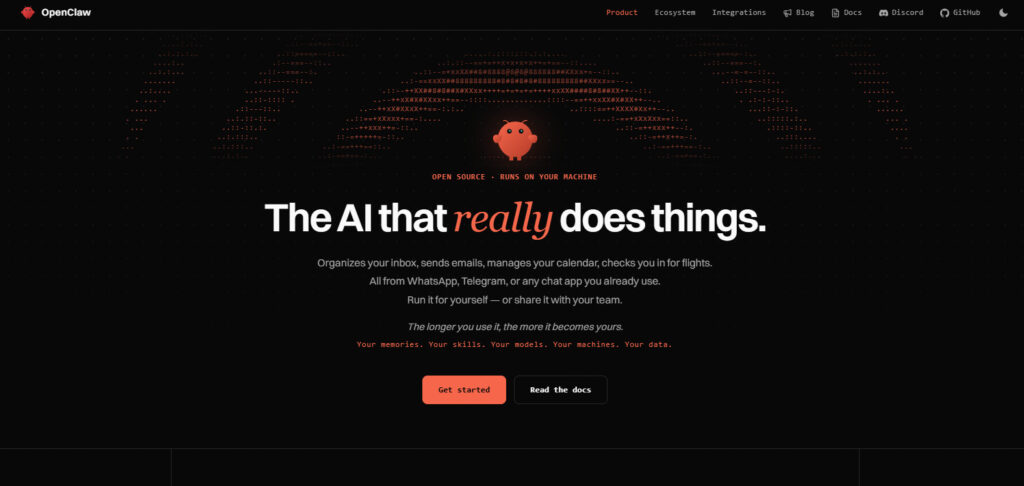
Claude Cowork
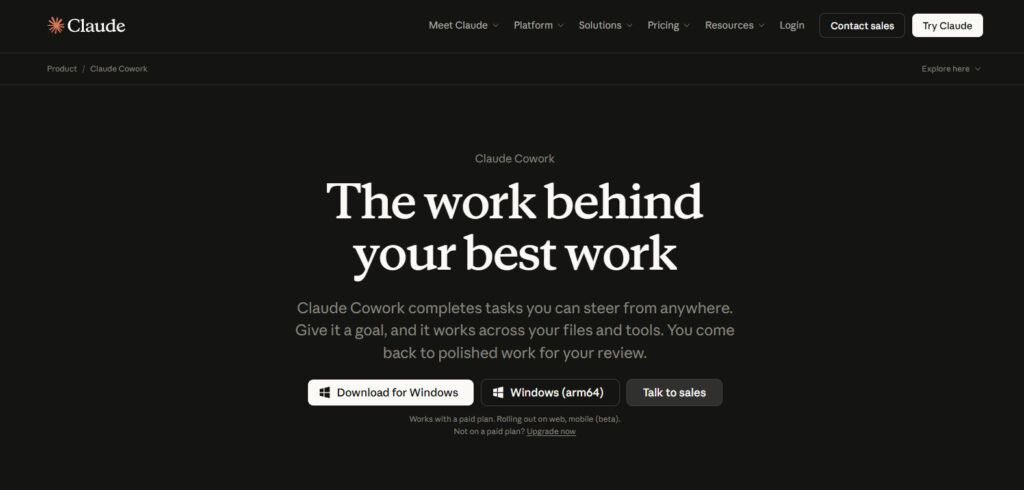
What it does: Anthropic’s entry into the same agent category, built on Claude. It performs multi-step work in a managed environment.
Where it wins: Deep integration with Claude and Anthropic’s ecosystem.
The tradeoff: It runs on Claude models only. There is no open-model failover, so when you hit a Claude rate limit or an Anthropic-side incident, there is no second vendor to catch the job. Ocai runs on open-weight models and fails over automatically. If model sovereignty matters to your team, see AI Model Sovereignty: The New Strategic Imperative.
Pricing: Not published as a standalone page as of this writing. Cowork ships through Claude’s plans, so verify current plan pricing on Anthropic’s site before comparing.
Manus
What it does: A managed agent that completes tasks end to end, from research to producing deliverables.
Where it wins: Less setup than any self-hosted option. You describe the task, it works.
What users report: The recurring complaint in reviews is cost predictability. One review roundup summarizes it as “credits burn too fast” relative to the work completed (Metaflow, Oct 2025). Another notes that credit-based pricing makes monthly planning difficult for daily users (Vellum, Aug 2026). That is a sourcing pattern worth taking seriously if you plan to run it every day.
Pricing: Credit-based with a free trial. Exact per-task cost is hard to forecast, which is the specific complaint above.
Lindy
What it does: A managed automation agent aimed at business workflows, meetings, and repetitive tasks rather than deep terminal work.
Where it wins: Non-technical users get agentic automation without touching a config file.
The tradeoff: It is workflow automation first, terminal agent second. If your work is code and servers, it is not a drop-in Hermes replacement.
Pricing: Plus $49.99, Pro $99.99, Max $199.99 per month, billed yearly (as of this writing). Verify current pricing before quoting.
ZeroClaw and NemoClaw
What they do: Smaller forks and rewrites in the same open-source claw family, offering the self-hosted agent idea with different defaults.
The honest note: These change fast and have smaller communities. They are worth watching, not worth betting a production workflow on unless you enjoy evaluating moving targets. None has a meaningful SaaS price to compare.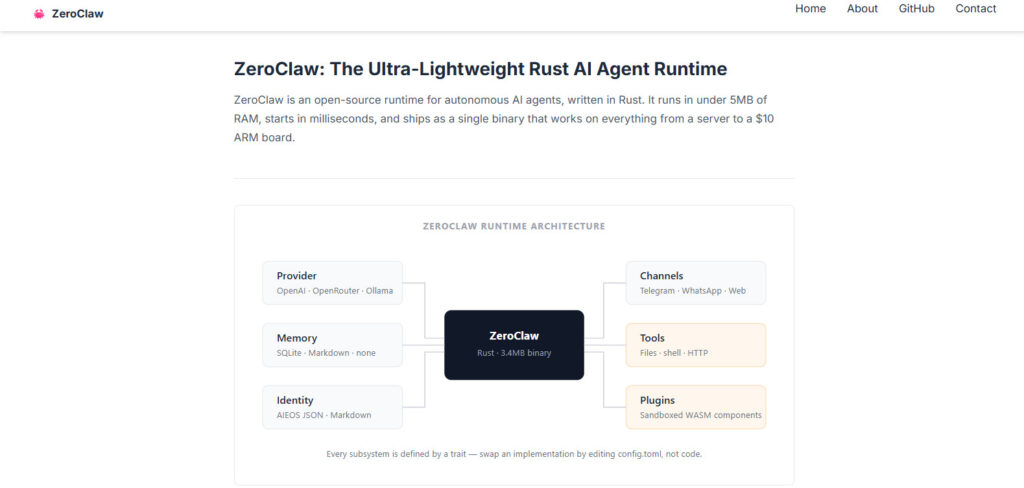
Perplexity Computer
What it does: Perplexity’s browser-operating agent, aimed at doing tasks in a web browser through natural language.
Where it wins: Strong for research and web-based tasks, tied into Perplexity’s search.
The tradeoff: Browser automation, not a general terminal agent. Different job from Hermes.
Pricing: Bundled with Perplexity plans (as of this writing). Verify on Perplexity’s pricing page.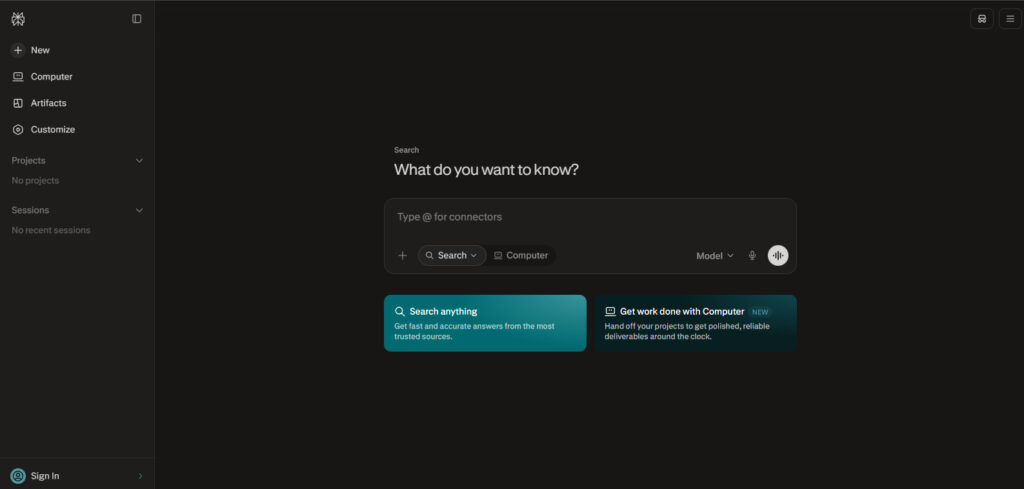
The Build-It-Yourself Bucket: LangGraph, CrewAI, n8n, Dify, OpenHands, AutoGPT
If your goal is to assemble an agent yourself, these are the frameworks people reach for. LangGraph and CrewAI give you graph and multi-agent orchestration in Python. n8n gives you visual workflows. Dify gives you a self-hosted app platform. OpenHands gives you an autonomous coding agent. AutoGPT is the project that popularized the loop idea years ago.
The honest note: these are not Hermes alternatives in the product sense. They are the raw parts you would use to build one. Choosing this bucket means you want the build, not the tool. If that sounds fun, you are the self-hoster Hermes was made for.
Hermes Agent vs the Alternatives: A Neutral Table
| Tool | Type | Setup | Pricing (as of this writing) | Model access |
|---|---|---|---|---|
| Hermes Agent | Self-hosted agent | Install script + backend + keys or Nous Portal | Free, or Nous Portal $20 / $100 / $200 per month | Any model or Nous Portal catalog |
| Ocai | Managed agent | None | Pay as you go, 100 free credits, no subscription | Open-weight models with failover |
| OpenClaw | Self-hosted agent | Install + config | Free on your hardware | Bring your own keys |
| Claude Cowork | Managed agent | None | Via Claude plans | Claude only |
| Manus | Managed agent | None | Credit-based | Managed models |
| Lindy | Managed automation | None | $49.99 / $99.99 / $199.99 per month | Managed models |
| LangGraph / CrewAI / n8n / Dify / OpenHands / AutoGPT | Frameworks | You build it | Varies by hosting | Bring your own |
Sources: Hermes Agent README and Nous Portal pricing page, Ocai pricing page, Anthropic and Perplexity sites, Metaflow and Vellum reviews, Hunt.io and ProArch advisories. Prices date and change; verify before quoting.
The Setup Cost Is the Real Filter
Every comparison above reduces to one question: who operates the harness?
Hermes, OpenClaw, and the framework bucket put you in the operator’s chair. That is not a flaw. It is the price of control. The people who thrive there treat the server as part of the hobby or the job.
The managed options remove the chair. Ocai, Manus, Lindy, and Cowork run the harness for you. What you give up is the ability to inspect every layer. What you get back is the agent doing work instead of you doing operations.
There is no wrong side of this divide. There is only the side you actually have time for. Open source AI is no longer optional, but operating it is still a job.
An Illustrative Example, Clearly Flagged
This is a worked example, not a measured benchmark. A founder wants a weekly competitor briefing delivered to their email.
On Hermes, they install the agent, pick a backend, wire the Tool Gateway for search, write a cron schedule in the config, and make sure the box stays up Sunday night. Each step is documented and learnable, and each step is on them.
On Ocai, they write the request once: what to research, what format to deliver, and the schedule. The sandbox runs it, the memory holds the format for next week, and the founder edits the output, not the infrastructure.
Same outcome, two very different jobs. Which job do you want?
How to Choose a Hermes Agent Alternative
If you want to self-host and own the whole stack, stay with Hermes. It is the best open-source option in this category, and the learning loop is real.
If you want the same self-improving agent idea without running a server, pick a managed platform. Ocai is the closest match on memory and open-model failover, with pay-as-you-go pricing so you are not renting an unused seat.
If you are already deep in Anthropic and never leave Claude, consider Claude Cowork, and accept the single-vendor risk.
If you want to build your own agent as a project, the framework bucket is where you live. That is a different goal, not a cheaper Hermes.
If you want a task agent for business workflows and never touch a terminal, test Manus or Lindy against your actual daily tasks before paying for a month.
FAQ
What is the best Hermes Agent alternative for most people?
A managed platform like Ocai, if you want the learning and memory without the harness. Hermes itself remains the best choice for self-hosters.
Is Hermes Agent free?
Yes. The agent is MIT licensed and free. Nous Portal is optional and costs $20, $100, or $200 per month for credits and hosted tools (as of this writing).
Why do people leave Hermes Agent?
The most common reasons are setup friction, the need to operate your own server, and the overhead of keeping memory and scheduled jobs alive on infrastructure you own.
Is OpenClaw safe?
It had a documented one-click RCE (CVE-2026-25253) with tens of thousands of exposed instances found in early 2026. Patch promptly and keep it off the public internet.
What about Claude Cowork?
It runs on Claude models only. That is its main tradeoff if you want model failover or open-weight flexibility.
The Short Version
Hermes Agent is a great open-source agent with a real learning loop. Its alternatives split into three lanes: managed agents like Ocai that remove the harness, self-hosted forks like OpenClaw that keep it, and frameworks for people who want to build their own. Pick by who operates the server, then start with 100 free credits and test on one real task.
Mahesh writes about AI workflows from Revenueholic, based on tools he actually uses for client work.