At 5:21 PM Eastern Time on June 12, 2026, Anthropic received a letter from the US government. By evening, Fable 5 and Mythos 5, two of the most capable AI models ever deployed, were disabled for every user on the planet. No warning. No transition period. No exceptions. The reason given was “national security authorities.” The mechanism was an export control directive that treats these models as munitions. And for the first time in the history of commercial AI, a frontier model was shut down not by its creator, but by a government order.
This is the story of what happened, why it happened, and what it means for the millions of people who woke up this morning to find their AI tools suddenly inaccessible.
Part One
The Directive: What Actually Happened
The US government issued an export control directive to Anthropic on June 12, 2026. The directive cited national security authorities and ordered the suspension of all access to Fable 5 and Mythos 5 by any foreign national, whether inside or outside the United States. This included foreign-national Anthropic employees, people who had built the very models they were now forbidden from accessing.
Here’s why this matters: under US export control law, there’s something called the “deemed export” rule. When a foreign national accesses controlled technology, even within the United States, it’s considered an “export” to that person’s home country. The government’s directive applied this rule to AI models. The net effect was that Anthropic had to disable Fable 5 and Mythos 5 for all customers, not just foreign users, because ensuring compliance would’ve been impossible otherwise.
Anthropic’s statement was blunt: “The net effect of this order is that we must abruptly disable Fable 5 and Mythos 5 for all our customers to ensure compliance.”
Fable 5 and Mythos 5 Launch
Anthropic launches two new frontier models with “strong safeguards” after weeks of red-teaming with US government, UK AISI, and third-party organizations.
Directive Received
Anthropic receives export control directive from US government citing national security authorities.
Access Disabled
Fable 5 and Mythos 5 disabled for all users globally. Other Anthropic models (Opus, Sonnet, Haiku) remain unaffected.
Users Discover Shutdown
Millions of users wake up to broken workflows, inaccessible projects, and no clear timeline for restoration.
The letter didn’t provide specific details of the national security concern. Anthropic’s understanding is that the government became aware of a method of “jailbreaking” Fable 5, a technique to bypass the model’s safeguards. But here’s where the story takes a strange turn.
Time Directive Received
Hours Warning Given
Users Affected
Access to all other Anthropic models, Opus, Sonnet, and Haiku, wasn’t affected. Only Fable 5 and Mythos 5 were targeted. This suggests the government’s concern was specific to the capabilities of these particular models, not AI models in general.
Part Two
The Jailbreak Claim: Why the Government Acted
According to Anthropic’s statement, the government believes it has become aware of a method to bypass, or “jailbreak,” Fable 5’s safeguards. The technique was used to identify a small number of previously known, minor vulnerabilities in software systems. On the surface, this sounds concerning. A model that can find security vulnerabilities could potentially be misused.
But Anthropic’s response reveals a more complicated picture. They reviewed a demonstration of the specific technique and found that the vulnerabilities it identified were “relatively simple.” More importantly, they found that other publicly-available models are able to discover them as well without requiring any bypass of safeguards.
These vulnerabilities all appear relatively simple, and we have found that other publicly-available models are able to discover them as well without requiring a bypass.
Anthropic Statement, June 12, 2026
This is the core of Anthropic’s disagreement with the government’s decision. If the capability to find these vulnerabilities exists in other models that remain freely available, including OpenAI, why was Fable 5 singled out? Anthropic’s statement notes that the level of capability displayed in the government’s evidence “is widely available from other models” and “is used every day by the defenders who keep systems safe.”
The jailbreak in question appears to be what Anthropic calls a “narrow, non-universal” jailbreak. In their taxonomy, there are two types:
Non-Universal
Narrow Jailbreak
Works in specific circumstances to elicit limited information. The Fable 5 jailbreak falls into this category. It essentially consists of asking the model to read a specific codebase and fix software flaws.
Universal
Broad Jailbreak
A method that can broadly bypass safeguards across a wide range of capabilities. Anthropic states that no testers have yet found a universal jailbreak for Fable 5, and they suspect perfect jailbreak resistance isn’t currently possible for any model provider.
Anthropic’s defense-in-depth strategy was built around this reality. They knew that perfect safeguard resistance wasn’t possible. So they aimed to make jailbreaks either narrow (limited in scope) or expensive to produce (requiring significant resources), combined with monitoring to detect and shut down attacks. This is also why they required 30-day retention of customer data with Fable 5, a policy that carried real costs with customers but allowed them to research and mitigate jailbreaks.
Anthropic’s most striking claim: “If this standard was applied across the industry, we believe it would essentially halt all new model deployments for all frontier model providers.” In other words, if finding a narrow jailbreak that discovers minor vulnerabilities is grounds for a government shutdown, no frontier model could survive.
The government has only provided verbal evidence of the potential jailbreak so far. Anthropic promises more details within 24 hours. But the fundamental question remains: if the capability exists elsewhere, and the vulnerabilities are minor, why the urgent, blanket shutdown?
Part Three
The Absurdity: When Code Becomes a Weapon
There’s a detail in Anthropic’s statement that reads like dark comedy: under the deemed export rule, foreign-national Anthropic employees can’t access the models they built. Their own commit history is now, legally speaking, an arms shipment to themselves. They crossed an international border by badging into the office.
This is the reality of export control law applied to AI. A model that exists as data on servers, that has no physical form, that primarily excels at generating text and apologizing for mistakes, is now classified alongside shoulder-fired missiles and nuclear technology. Somewhere on a server, there’s a weapons system whose primary capability is being excessively polite.
But this isn’t the first time the US government has classified software as a munition. And the historical parallel is instructive.
For historical context: the last software the US classified as a munition was defeated by a paperback. PGP’s source code was printed as a book because books are protected speech and floppy disks were arms exports. People literally read a weapon at the beach.
In the 1990s, the US government classified encryption software as a munition under the same export control laws now being applied to AI models. Phil Zimmermann, the creator of PGP (Pretty Good Privacy), faced a three-year criminal investigation for exporting cryptography. The government’s argument was that strong encryption was a national security risk if available to foreign adversaries.
The workaround was ingenious. Zimmermann published the complete source code of PGP as a book. Books are protected by the First Amendment as free speech. Software on floppy disks was a controlled munition. But the same code printed on paper could be legally exported. People literally read a weapon at the beach. The government eventually dropped its investigation, and encryption export controls were gradually relaxed.
The PGP episode illustrates something important about export controls on software: they’re difficult to enforce in a world where information can cross borders instantly. An AI model isn’t a physical product. It can be copied, transferred, and accessed from anywhere. The deemed export rule, designed for physical technology, becomes almost absurd when applied to models that exist as data.
Fable 5 is the first LLM to be classified as a munition. It won’t be the last. The question isn’t whether export controls will be applied to AI, but how broadly and how effectively. The PGP story suggests that over-broad controls may ultimately prove counterproductive, but the immediate impact on users is very real.
For the millions of users who woke up to broken workflows this morning, the legal and historical context matters less than the practical question: what do I do now?
Part Four
What Users Should Do Right Now
If you’re reading this because your Fable 5 or Mythos 5 workflow just broke, here’s what you need to know.
Don’t Panic, But Act Quickly
Your data isn’t lost. Anthropic hasn’t deleted anything. The models are simply inaccessible. If you have critical work that depends on Fable 5 or Mythos 5, you need to migrate to alternatives immediately. We’ve published a guide to Fable 5 alternatives and where to move your work that covers the options.
Check Your Dependencies
If you’re a developer, identify every place in your codebase that calls Fable 5 or Mythos 5. These calls are now failing. You need to either switch to other Anthropic models (Opus, Sonnet, Haiku are still working) or migrate to alternative providers.
Understand the Refund Situation
Anthropic hasn’t yet announced a refund policy for Fable 5 subscribers. If you subscribed specifically for Fable 5 access, you may be entitled to a refund. Check Anthropic’s status page and support channels for updates. Many users are already demanding refunds.
Consider the Long-Term
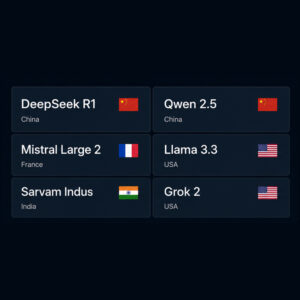
This event raises a fundamental question for anyone building on AI: can you depend on access to frontier models? If a government can shut down a model you rely on with zero notice, you need a contingency plan. This is why many organizations are now looking at open-source models and multi-model platforms that aren’t dependent on a single provider.
Anthropic says they’re “working to restore access as soon as possible.” But there’s no timeline, and no guarantee. The government’s directive is a legal order. Anthropic can disagree, but they must comply. Whether access returns depends on factors outside Anthropic’s control.
Part Five
The Bigger Picture
The Fable 5 shutdown isn’t just about one model. It’s about the future of AI access.
For the first time, a frontier AI model has been classified as a munition and shut down by government order. The precedent is now set. If a narrow jailbreak that discovers minor vulnerabilities is sufficient grounds for a blanket shutdown, every frontier model is potentially vulnerable to the same treatment.
This has implications that extend far beyond Anthropic:
For Users
Dependency Risk
If your business depends on access to a specific frontier model, you now have a new category of risk to manage. Models can be shut down not just by business decisions, but by government orders.
For Companies
Sovereignty Questions
Non-US companies now face a strategic question: can you safely depend on US-controlled frontier models? The same export control framework that applies to semiconductors now applies to AI.
We’ll be exploring these questions in depth in our full analysis of what the Fable 5 shutdown means for the future of AI access. We’ll also be publishing a deep dive on AI model sovereignty and why this event matters for anyone building AI-dependent systems outside the United States.
For now, the immediate lesson is clear: the era of assuming frontier AI access is a given is over. Governments can shut down models. The question is whether you’re prepared when it happens.
Fable 5 and Mythos 5 were shut down by a US government export control directive at 5:21 PM ET on June 12, 2026. The reason given was a narrow jailbreak that discovered minor vulnerabilities, capabilities that exist in other publicly available models. Anthropic disagrees with the decision and is working to restore access. There’s no timeline for restoration. Users should migrate to alternatives immediately and consider the long-term implications of depending on any single frontier model.
Related in this series: What the Fable 5 Shutdown Really Means for AI · Beyond Fable 5: The Best Alternative Models · AI Model Sovereignty: The New Strategic Imperative · Open Source AI Is No Longer Optional